|
|
The Best
Multivitamins? Answers to Your Health Questions.
By Marcus Laux:
ND
Dr. Marcus Laux is a licensed naturopathic physician and a member of both
the Enzymatic Therapy and PhytoPharmica Scientific Advisory Boards. He
received his doctorate from the National College of Naturopathic Medicine
(NCNM) in Portland, where he serves on staff as a clinical professor.
Dr. Laux is the co-author of “Natural Woman, Natural Menopause”
(Harper Collins, 1997), a complete plan for staying naturally well through
menopause and beyond. He has been seen by millions
on his network television series “The Natural Health Show” in
Europe, “Wellness Watch” a daily news segment in Canada, and
currently on Fox News’s “MD TV” in the United States.
Multivitamin Quick Menu
There are
many vitamin and mineral supplements from which to choose. Finding the
right multivitamin may take a little time and require some effort. You
need to ask questions, read labels, and compare products. You also need
to choose wisely and use multivitamins to complement good nutrition, not
replace it. Once you find the right formula for your gender and age, you
will have a stronger nutritional foundation.
Selecting
a daily multivitamin – What exactly are vitamins?
A vitamin
is an organic substance or chemical found in food that is absolutely necessary
for life. We now know that even though vitamins each have their own specific
jobs, they also work together as a team. A deficiency in even one vitamin
can make us very sick.1 Vitamins are either fat or water-soluble. Vitamins
A, D, E, and K are fat-soluble and can be stored for awhile in our fat
and in the liver. The water soluble vitamins, vitamin C and the B vitamins,
can’t be stored, and must be taken more than once a day for optimum
nutrition.2
[Top]
What
does RDA mean?
The RDA,
or Recommended Dietary Allowance, is defined as “the average daily
dietary intake level that is sufficient to meet the nutrient requirement
of nearly all healthy individuals in a group.” This means that RDA
amounts of vitamins and minerals are the standard amounts that healthy
people need to consume each day to prevent dietary deficiencies.
A good example is vitamin C. The RDA for this hard working vitamin is
the level of vitamin C you need to prevent scurvy, not the amount you
need for superior health.3
The RDA does not account for people who are teenagers, elderly, past the
age of 45, taking oral contraceptives, pregnant, nursing, dieting, engaging
in intense physical activity, drinking alcohol, taking prescription medications,
eating processed food, eating prepared food, stressed at work or at home,
smoking, or exposed to secondhand smoke or air pollution.4-12
[Top]
My
diet high is very high in whole grains and I eat at least 9 servings of
fruits and vegetables every day. Do I still need to take a multivitamin?
This question
gets easier to answer as more and more diet and multivitamin studies are
completed. Recent studies have shown that, even in individuals who were
eating a very healthy diet, taking a multivitamin improved their nutritional
status.13,14
[Top]
There
are so many different multivitamin formulas on the shelves. What vitamins
should be in the supplement I buy?
It depends
on many things. Men and women have different nutritional needs and therefore,
need different multivitamin formulas. Your age also determines the amount
and type of vitamins and minerals you should take. In the case of multivitamins,
“one size” most definitely does not fit all!
However, men and women of all ages require some similar vitamins. Let’s
start with those vitamins.
[Top]
What
minerals do we need to stay healthy?
There are
many minerals we need each day to keep us healthy. Minerals provide rigidity
and strength to our teeth and bones that form our skeleton, help with
nerve and muscle function, are vitally important in biochemical interactions
and the normal clotting of blood, and for everyday tissue repair and growth.31
Make sure
the multivitamin supplement you buy contains calcium, iodine, magnesium,
zinc, selenium, copper, manganese, chromium, molybdenum, sodium, potassium,
boron, and vanadium.32 Iron should only be in formulas designed for women
who are still menstruating. Other adults can easily meet their iron needs
from food, and excess can be unhealthy.33
[Top]
Do
women need certain minerals more than men?
Yes, women
need silica to help keep their bones healthy.34 Compared to men, women
of any age also need more boron and calcium.35 However, women going through
or past menopause need even more calcium to protect their bones.36
[Top]
What
can destroy or interfere with vitamins and minerals?
Researchers
believe that while food may, in fact, contain all the good things we need,
many factors can destroy or interfere with many vitamins and minerals.
Vitamins are easily wiped out by light, air, heat, and water. Cooking
many foods actually destroys their vitamins. Eating other foods raw is
less nutritious than cooking them.37 Drinking alcohol will deprive you
of several vitamins.38 Oral contraceptives interfere with B12 and folic
acid in women who take them.39 When you eat a meal at a restaurant, don’t
count on getting any vitamins from your food as the use of heating lamps
destroys many nutrients.37 Many prescription medications can rob you of
several vitamins and minerals.40 Smoking cigarettes and exposure to secondhand
smoke destroys vitamin C.41
Fortunately,
taking a quality multivitamin will provide you with dietary insurance
against all these losses.13,14 And, the good news gets even better. Studies
have also shown that the longer you use supplemental multivitamins, the
more substantial the benefits are to your health.42,43
[Top]
Is
it possible for me to get all the vitamins, minerals, and herbs I need
in one pill taken once a day?
No, you
can’t. For vitamins, minerals, and herbs to be effective they need
to be in amounts that could not possibly fit into a single tablet or capsule
in a size small enough to be swallowed. Many vitamins are only active
in the body for a short period of time and need to be replenished every
6 to 8 hours. You need a formula designed to be taken at intervals during
the day (3 times a day, just like meals). This will provide you with superior
benefits.
[Top]
What
else should be in multivitamin formulas?
Both men
and women can benefit from a combination of lutein/ zeaxanthin, grape
seed, bilberry, black tea, and cherry fruit.
Lutein and zeaxanthin are found in high concentrations in the macula–the
back of the eye where the retina is located. Both are excellent antioxidants.44
Anyone who spends time outdoors in the sun may be exposed to harmful ultraviolet
radiation, which is very damaging to our eyesight. Lutein and zeaxanthin
help protect us from this radiation, help filter out other harmful light,
help prevent age-related macular degeneration (the most common form of
blindness for older people), and help prevent glaucoma and cataracts.45-47
Grape seed
is a potent antioxidant that helps strengthen our capillaries, veins,
and arteries; helps our heart stay healthy; helps decrease bruising, reduce
varicose veins, and leg swelling. Grape seed also helps our immune systems
and helps reduce allergic responses.48,49
Bilberry
is another antioxidant that helps prevent hardening of the arteries, cataracts,
and macular degeneration.50 Studies show that people who drink black tea
have less cancer and lower chances of stroke.51,52 And, cherry fruit is
another powerful antioxidant that can help reduce the risk of death from
heart attack. Flavonoids found in cherries are also natural anti-inflammatory
compounds. Flavonoids also strengthen collagen, tendons, and cartilage.
Extracts of cherries are used frequently in Europe for treatment of varicose
veins.53
[Top]
Are
there other ingredients that should be in multivitamin formulas for men?
If you are
purchasing a multivitamin for a man, make sure lycopene is in the formul
Lycopene is the pigment that makes tomatoes red. The redder the tomato,
the more lycopene is present. Numerous studies suggest that lycopene levels
in the blood may be associated with reduced incidence of prostate cancer
as well as heart disease and agerelated macular degeneratioin.54,55
[Top]
What
should be in multivitamin formulas for women?
All women
can benefit from cranberry, nature’s antibiotic. Women have used
this excellent antioxidant for many years to help reduce urinary tract
infections.56,57 Women of all ages are concerned about supporting bone
health. Phosphorus is an important bone building nutrient.58,59 Women
who are still menstruating should look for chaste tree berry extract in
their multivitamin formulas. This herb can reduce the symptoms of premenstrual
syndrome
(PMS).60 Women going through meno-pause or past it need soy extract. Soy
protects women against heart attacks and keeps bones from becoming brittle
and breaking.61,62
[Top]
What
else should I look for in a multivitamin supplement?
Make sure
the manufacturer is
reputable. Ask the people working in the store for brands they recommend
or personally take. Read the labels of any multivitamin supplement you
are considering purchasing. They should be protected from light, since
light can destroy these fragile substances. That means they should be
in an opaque (non-transparent) package, and the tablets should be coated
with a light resistant shield (usually white or ivory). Besides vitamins,
minerals, and herbs it should contain, some things shouldn’t be in
your multivitamin. The best multi-vitamins contain no sugar, artificial
coloring, or artificial flavoring.
[Top]
Conclusion
While it’s
difficult to keep up with the latest nutrition developments, finding a
multiple that can help you achieve optimum health may be easier than you
think. The right blend for you depends on your gender, age, and additional
health concerns. Knowing the vitamins, minerals, and herbs that you need
will help you when choosing a multivitamin. Life is too short to spend
it saddled with chronic illness and or poor energy. High quality multivitamins
will protect you with powerful dietary insurance for superior health.
[Top]
Vitamin A:
Helps prevent certain types of cancer; helps reduce harmful cholesterol levels and the risk of heart attacks. Prevents night blindness; helps improve our vision; aids our immune system; helps keeps our skin, teeth, bones, hair, and gums healthy and strong; helps reduce age spots.15,16
Vitamin C:
Strengthens the immune system; helps prevent chronic illness, cataracts, assists in lowering cholesterol, helps make collagen; repairs damaged cells, bones and teeth. Helps heal wounds, burns, and bleeding gums. Helps healing after surgery, prevents colds and flu, protects us against cancer, and helps our bodies absorb iron.17
Vitamin D:
Without vitamin D, the minerals phosphorus and calcium cannot build strong bones and teeth. With vitamins C and A, vitamin D helps prevent colds; helps absorb calcium and vitamin 18
Vitamin E:
Vitamin E helps keep our skin young looking, helps oxygen get around our bodies; prevents and helps dissolve blood clots; helps burns heal faster; helps lower blood pressure; helps nerves convey messages faster; stops leg cramps and helps boost our energy levels.19
Vitamin K:
Vitamin K is essential to the activation of osteocalcin, a protein that helps prevent bone loss.20 Additionally, without vitamin K, our bodies couldn’t make prothrombin, a blood-clotting chemical, and our blood simply would not clot.21
The B Vitamins:
The B vitamins are an important complex of vitamins. Like a group of good friends, the B vitamins do their best when they are all together.
Thiamin:
Also called vitamin B1, thiamin helps keep our nerves and muscles, including the heart, working well. It can help prevent seasickness; tooth pain that happens after dental work; helps treat herpes zoster (shingles); and helps the digestion of carbohydrates. Thiamin prevents beriberi.22
Riboflavin:
Also known as vitamin B2 and vitamin G, riboflavin is easily harmed by light. Deficiency in riboflavin is the most common vitamin deficiency in Americ Riboflavin helps our vision; supports reproduction; helps eliminate sore mouths, lips, and tongues; and helps metabolize fats, proteins, and carbohydrates.23
Niacin:
Niacin helps lower total cholesterol, raises HDL (the good) cholesterol, improves circulation, helps make our skin healthy looking, helps to eliminate bad breath, helps to reduce migraine headaches and dizziness, and reduces our cravings for sweets.24
Vitamin B6:
Also referred to as pyridoxine HCl, this B vitamin can only work in our bodies for eight hours. Then we must get more. Deficiencies of vitamin B6 are noted in many diseases. Vitamin B6 helps us make antibodies, helps stop nausea, reduces morning sickness, relieves mouth dryness caused by certain medications, helps reduce leg cramps, numbness in the hands, helps us use protein and fats, and helps make niacin. With folic acid, B6 can reduce harmful levels of homocysteine, an amino acid implicated in heart disease and Alzheimer’s disease.25
Vitamin B12:
Possibly the most complex of all the vitamins, B12 is sometimes called “nature’s most beautiful cofactor” because of its striking deep red color. With folic acid, B12 helps make DNA, the molecule that carries our genetic code. Vitamin B12 helps our nerve cells spark and communicate, helps burn fat, and keeps us energized. Deficiencies of B12 can result in a serious type of anemia and potentially harmful nerve damage.26
Folic Acid:
Also called folate, this B vitamin has made huge headlines recently for its powerful ability to prevent spina bifida, a serious birth defect.27 A recent study determined that folic acid reduces the risk of breast cancer in women who drink alcohol.28 Folic acid can also help milk production in nursing mothers; reduce pain; make our skin look healthier; kill the germs that cause food poisoning; help cells grow and divide; and help make DN27
Biotin:
Our intestines can make biotin, but only if we have an adequate amount of beneficial flor Biotin is a natural beauty product. It helps delay gray hair and baldness. Biotin also helps heal eczema and inflammation of the skin. It can also help aching muscles.29 Pantothenic Acid: This B vitamin helps us make antibodies to fight infection. Pantothenic acid converts sugar and fat into energy and reduces fatigue. Our adrenal glands depend on pantothenic acid to function well.30
Pantothenic Acid:
This B vitamin helps us make antibodies to fight infection. Pantothenic acid converts sugar and fat into energy and reduces fatigue. Our adrenal glands depend on pantothenic acid to function well.30
References
1. Grodner
M, Anderson SL, DeYoung S. Role in wellness. In: Foundations and Clinical
Applications of Nutrition: A Nursing Approach. St. Louis, Mo: Mosby; 2000:
172-173
2. Vitamin categories. Ibid. 173-174. 3. National Research Council. Summary.
In: Recommended Daily Allowance. 10th ed. Washington, DC: Author; 1989:
1-9.
4. Rockett HR, Berkey CS, Field AE, Colditz G Cross-sectional measurement
of nutrient intake among adolescents in 1996. Prev Med. 2001;33:27-37.
5. Abrams S Calcium turnover and nutrition through the life cycle. Proc
Nutr Soc. 2001;60:283-9.
6. Bendich Micronutrients in women’s health and immune function. Nutrition.
2001;17:858-67.
7. Carr AC, Frei B. Toward a new recommended dietary allowance for vitamin
C based on antioxidant and health effects in humans. Am J Clin Nutr.1999;69:1086-1107.
8. High KP. Nutritional Strategies to Boost Immunity and Prevent Infection
in Elderly Individuals. Clin Infect Dis. 2001;33:1892-1900.
9. Mezquita-Raya P, Munoz-Torres M, Luna JD, et al. Relation between vitamin
D insufficiency, bone density, and bone metabolism in healthy postmenopausal
women. J Bone Miner Res. 2001;16:1408-15.
10. Balakrishnan SD, Anuradha CV. Exercise, depletion of antioxidants
and antioxidant manipulation. Cell Biochem Funct. 1998;16:269-75.
11. Handelman GJ, Packer L, Cross CE. Destruction of tocopherols, carotenoids,
and retinol in human plasma by cigarette smoke. Am J Clin Nutr. 1996;63:559-65.
12. Murray MT, Pizzorno J. Supplementary measures. In: Encyclopedia of
Natural Medicine. Rocklin, Calif: Prima Publishing; 1998: 71-80.
13. McKay DL, Perrone G, Rasmussen H, Dallal G, Blumberg JB. Multivitamin/mineral
supplementation improves plasma B-vitamin status and homocysteine concentration
in healthy older adults consuming a folate-fortified diet. J Nutr. 2000;130:3090-3096.
14. McKay DL, Perrone G, Rasmussen H, et al. The effects of a multivitamin/mineral
supplement on micronutrient status, antioxidant capacity and cytokine
production in healthy older adults consuming a fortified diet. J Am Coll
Nutr. 2000;19:613-621.
15. Ross AC. Vitamin A and retinols: functions. In: Shils ME, Olson JA,
Shine M, Ross AC, Eds. Modern Nutrition in Health and Disease. 9th ed.
Baltimore, Md: Lippincott Williams & Wilkins; 1999: 317-318.
16. Grodner M, Anderson SL, DeYoung S. Vitamin In: Foundations and Clinical
Applications of Nutrition: A Nursing Approach. St. Louis, Mo: Mosby; 2000:
188-194.
17. Jacobs R Vitamin C: Biochemical functions. In: Shils ME, Olson JA,
Shine M, Ross AC, Eds. Modern Nutrition in Health and Disease. 9th ed.
Baltimore, Md: Lippincott Williams & Wilkins; 1999:470-473.
18. Grodner M, Anderson SL, DeYoung S. Vitamin D. In: Foundations and
Clinical Applications of Nutrition: A Nursing Approach. St. Louis, Mo:
Mosby; 2000: 194-198.
19. Traber MG. Vitamin E: Biologic function. In: Shils ME, Olson JA, Shine
M, Ross AC, Eds. Modern Nutrition in Health and Disease. 9th ed. Baltimore,
Md: Lippincott Williams & Wilkins; 1999:348-350.
20. Schaafsma A, de Vries PJ, Saris WH. Delay of natural bone loss by
higher intakes of specific minerals and vitamins. Crit Rev Food Sci Nutr.
2001;41(4):225-49.
21. Grodner M, Anderson SL, DeYoung S. Vitamin K. In: Foundations and
Clinical Applications of Nutrition: A Nursing Approach. St. Louis, Mo:
Mosby; 2000: 198-199.
22. Tanphaichitr V. Thiamin. In: Shils ME, Olson JA, Shine M, Ross AC,
Eds. Modern Nutrition in Health and Disease. 9th ed. Baltimore, Md: Lippincott
Williams & Wilkins; 1999: 381-389.
23. Mindell E. Riboflavin. In: Vitamin Bible. New York, NY: Warner Books;1991:31-32.
24. Cervantes-Laurean D, McElvaney NG, Moss J. Niacin. In: Shils ME, Olson
JA, Shine M, Ross AC, Eds. Modern Nutrition in Health and Disease. 9th
ed. Baltimore, Md: Lippincott Williams & Wilkins; 1999: 401-411.
25. Leklem JE. Vitamin B6. In: Shils ME, Olson JA, Shine M, Ross AC, Eds.
Modern Nutrition in Health and Disease. 9th ed. Baltimore, Md: Lippincott
Williams & Wilkins; 1999:413-421.
26. Fleming T., ed. Vitamin B12. In: PDR® for Nutritional Supplements.
Montvale, NJ: Medical Economics Company; 2001: 477-487.
27. Herbert V. Folic acid. In: Shils ME, Olson JA, Shine M, Ross AC, Eds.
Modern Nutrition in Health and Disease. 9th ed. Baltimore, Md: Lippincott
Williams & Wilkins; 1999: 433-458.
28. Zhang S, Hunter DJ, Hankinson SE, et al. A prospective study of folate
intake and the risk of breast cancer. JAM 1999;281:1632-1637.
29. Mock DM. Biotin. In: Shils ME, Olson JA, Shine M, Ross AC, Eds. Modern
Nutrition in Health and Disease. 9th ed. Baltimore, Md: Lippincott Williams
& Wilkins; 1999:459-466.
30. Plekovsky-Vig N. Pantothenic acid. In: Shils ME, Olson JA, Shine M,
Ross AC, Eds. Modern Nutrition in Health and Disease. 9th ed. Baltimore,
Md: Lippincott Williams & Wilkins; 1999: 423-432.
31. Grodner M, Anderson SL, DeYoung S. Minerals. In: Foundations and Clinical
Applications of Nutrition: A Nursing Approach. St. Louis, Mo: Mosby; 2000:
215-225.
32. Corti MC, Guralnik JM, Salive ME, et al. Serum iron level, coronary
artery disease, and all-cause mortality in older men and women. Am J Cardiol.
1997;79:120-127.
33. Kang JO. Chronic iron overload and toxicity: clinical chemistry perspective.
Clin Lab Sci. 2001;14:209-19.
34. Rico H, Gallego-Lago JL, Hernandez ER, et al. Effect of silicon supplement
on osteopenia induced by ovariectomy in rats. Calcif Tissue Int. 2000;66:53-55.
35. Bunker VW. The role of nutrition in osteoporosis. Br J Biomed Sci.
1994;51:228-240.
36. Kenny AM, Prestwood KM. Osteoporosis. Pathogenesis, diagnosis, and
treatment in older adults. Rheum Dis Clin North Am. 2000;26:569-591.
37. Grodner M, Anderson SL, DeYoung S. Vegetable victories. In:
Foundations and Clinical Applications of Nutrition: A Nursing Approach.
St. Louis, Mo: Mosby; 2000: 190.
38. Leo MA, Lieber CS. Alcohol, vitamin A, and ß-carotene: adverse
interactions, including hepatotoxicity and carcinogenicity. Am J Clin
Nutr 1999; 69:1071-1085.
39. Shojania AM. Oral contraceptives: effect of folate and vitamin B12
metabolism. Can Med Assoc J. 1982;126:244-247.
40. Heins JR. Interactions between vitamins and drugs. S D J Med. 2002;55:69-70.
41. Harkins R, Bratman S. Introduction. In: The Drug, Herb, Vitamin Interactions
Bible. St. Louis, Mo: Prima Publishing;2000: xi-xiv.
42. Lykkesfeldt J, Loft S, Nielsen JB, Poulsen HE. Ascorbic acid and dehydroascorbic
acid as biomarkers of oxidative stress caused by smoking. Am J Clin Nutr.
1997;65:959-963.
43. Giovannucci E, Stampfer MJ, Colditz GA, et al. Multivitamin use, folate,
and colon cancer in women in the Nurses’ Health Study. Ann Intern Med.
1998;129:517-524.
44. Fleming T., ed. Lutein and zeaxanthin. In: PDR® for Nutritional
Supplements. Montvale, NJ: Medical Economics Company; 2001: 281-284.
45. Jacques PF, Chylack LT Jr, Hankinson SE, et al. Long-term nutrient
use and early age-related nuclear lens opacities. Arch Opthalmol. 2001;119:1009-1019.
46. Junghans A, Sies H, Stahl W. Macular pigments lutein and zeaxanthin
as blue light filters studied in liposomes. Arch Biochem Biophys. 2001;391:160-164.
47. Sujak A, Gabrielska J, Grudzinski W, Borc R, Mazurek P, Gruszecki
WI. Lutein and zeaxanthin as protectors of lipid membranes against oxidative
damage: the structural aspects. Arch Biochem Biophys. 1999;371:301-307.
48. Sato M, Bagchi D, Tosaki A, Das DK. Grape seed proanthocyanidin reduces
cardiomyocyte apoptosis by inhibiting ischemia/reperfusion-induced activation
of JNK-1 and C-JUN. Free Radic Biol Med. 2001;31:729-737.
49. Joshi SS, Kuszynski CA, Bagchi D. The cellular and molecular basis
of health benefits of grape seed proanthocyanidin extract. Curr Pharm
Biotechnol. 2001;2:187-200.
50. Monograph. Vaccinium myrtillus (bilberry). Altern Med Rev. 2001;6:500-504.
51. Wiseman S, Mulder T, Rietveld Tea flavonoids: bioavailability in vivo
and effects on cell signaling pathways in vitro. Antioxid Redox Signal.
2001;3:1009-1021.
52. Warden BA, Smith LS, Beecher GR, Balentine DA, Clevidence B Catechins
are bioavailable in men and women drinking black tea throughout the day.
J Nutr. 2001;131:1731-1737.
53. Seeram NP, Bourquin LD, Nair MG. Degradation products of cyanidin
glycosides from tart cherries and their bioactivities. J Agric Food Chem.
2001;49:4924-4929.
54. Kucuk O, Sarkar FH, Sakr W, et al. Phase II randomized clinical trial
of lycopene supplementation before radical prostatectomy. Cancer Epidemiol
Biomarkers Prev. 2001;10:861-868.
55. Lu QY, Hung JC, Heber D, et al. Inverse associations between plasma
lycopene and other carotenoids and prostate cancer. Cancer Epidemiol Biomarkers
Prev. 2001;10:749-756.
56. Foo LY, Lu Y, Howell AB, Vorsa N. The structure of cranberry proanthocyanidins
which inhibit adherence of uropathogenic P-fimbriated Escherichia coli
in vitro. Phytochemistry. 2000;54:173-181.
57. Jackson B, Hicks LE. Effect of cranberry juice on urinary pH in older
adults. Home Healthc Nurse. 1997;15:198-202. Review.
58. Knochel JP. Functions of phosphorus. In: Shils ME, Olson JA, Shine
M, Ross AC, Eds. Modern Nutrition in Health and Disease, 9th ed. Baltimore,
Md: Lippincott Williams & Wilkins; 1999: 159.
59. Gur A, Colpan L, Nas K, et al. The role of trace minerals in the pathogenesis
of postmenopausal osteoporosis and a new effect of calcitonin. J Bone
Miner Metab. 2002;20:39-43.
60. Fleming T, ed. Chaste tree berry. In: PDR® for Herbal Medicines.
Montvale, NJ: Medical Economics Company; 2000:176-177.
61. Vigna GB, Pansini F, Bonaccorsi G, et al. Plasma lipoproteins in soy-treated
postmenopausal women: a double-blind, placebo-controlled trial. Nutr Metab
Cardiovasc Dis. 2000;10:315-322.
62. Kritz-Silverstein D, Goodman-Gruen DL. Usual dietary isoflavone intake,
bone mineral density, and bone metabolism in postmenopausal women. J Womens
Health Gend Based Med. 2002;11:69-78.
|
Get Free Information about Herb, Vitamin and Drug Interactions
Health Notes is the leading provider of science-based information on healthy living. Gathered from scientific studies published in over 550 peer-reviewed medical and scientific journals. Visit Health Notes for drug interactions
|
HEALTH FACT: Studies have shown that the longer you use supplemental multivitamins, the more substantial the benefits are to your health. 42,43
|
Antioxidant Research
A collection of PubMed database studies. Learn about current antioxidant
research evidence.
Test Your Immune System
Does your immune system need a boost? This test by Dr. Linda Page is quick and easy
Advertisement
A Survey of the Multivitamins
Multivitamins
Liquid Vitamins
Women’s Multivitamin
Menopause Mutlivitamins
Men’s Multivitamin
Male Teen Multivitamin
50+ Male Vitamins
Pre Natal Multivitamins
Diabetes Vitamin Formula
Multivitamin
with Whole Foods & Herbs
 Rainbow
Light’s Complete Nutritional System multivitamin is the original food-based
multiple, combining nutrients, green foods and herbs to deliver broad
spectrum daily nutritional support. It provides a simple, comprehensive
solution for people wanting to meet their nutritional requirements while
noticeably improving overall vitality levels through the addition of nearly
2000 mg of whole foods and herbs. Rainbow
Light Complete Nutritional System 180 Tabs
[Top]
Liquid Multivitamin
A
Taste Above the Rest – Ultra Absorbable. Your Mind, Your Body, Your
Health – It’s All About U
U-trition’s Liquid Vitamin Plus has therapeutic dosages of Green
Tea, Ginseng, Gingko Biloba & Grape Seed Extract. It provides a maintenance
dosage of Glucosamine to lubricate and strengthen joints and a higher
dosage of B-Vitamins per serving than any other multivitamin in the marketplace.
In addition to the ingredients listed above, this formula provides 65
trace minerals derived from plants and 100% of all your daily needs for
vitamins.Visit Vitacost for Liquid
Vitamin Plus
Recommended 1 ounce/30 ml per day (2 tablespoons). Chilren:
Recommended 1/2 ounce/15 ml per day (1 tablespoon) for children under
12 years of age.
[Top]
Women’s Multivitamin
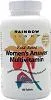 Holistic
Nutrition with Energizing Foods & Herbs. HRT & Birth Control Compatible.
The Advanced Nutritional Solution For All Women — With Antioxidant Protection,
Complete Bone Support And Energizing Foods & Herbs Rainbow Light®Women’s
Answer™ Multivitamin is a one-step nutritional solution for women of all
ages and in all cycles of life. It’s designed to answer the special needs
of a woman’s body, such as advanced support for bone health, heart health,
and the demands of a woman’s lifestyle. And with no hormone-balancing
herbs, Woman’s Answer is safe to take while pregnant or nursing and is
compatible with both birth control pills and hormone-replacement therapy.
Visit VitaCost for Rainbow
Light Women’s Answer Multivitamin
180 tablets
: 6 tablets per day
[Top]
Menopause Multivitamin
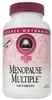 Because
the menopausal years place unique nutritional demands on a woman’s body,
Source Naturals created Menopause Multiple. This comprehensive formula
brings together premier phytonutrients and herbs—including genistein,
black cohosh, and vitex—plus vitamins and minerals known to support the
biochemistry of mature women. Source
Naturals, Menopause Multiple
[Top]
Men’s Multivitamin
 Doctor’s
Choice for Men™ provides essential nutrients for masculine functions.
This formula includes high-quality herbal extracts such as Muira puama,
which helps improve libido and sexual function and ginseng, which helps
support healthy testosterone levels. Visit VitaCost for Doctor’s
Choice for Men
120 tablets
: 4 tablets per day
[Top]
Male Teen Multivitamin
 Complete
daily multiple vitamin supplement with minerals. Iron-Free. Adolescent
boys have unique nutritional needs; that’s why Doctor’s Choice
for Male Teens™ includes extra vitamin A and zinc, as well as
sarsaparilla. Vitamin A fights free radicals, contributes to the immune
system, and supports clear skin. Generally, adolescent boys suffer more
from occasional acne because of the changing levels of male hormones.
Researchers are exploring the link between sarsaparilla and skin health.
Sexual maturation in boys increases their need for zinc, which is involved
in the immune system and the male sex glands. Visit VitaCost for:
Doctor’s
Choice for Male Teens
120 tablets
: 4 tablets per day
[Top]
Multivitamin:
50+ Male
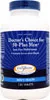 A
complete multiple formula designed for men age 50 and over. Specially
designed for men age 50 and over, this multiple formula includes extra
pantothenic acid, zinc, and niacin, as well as herbal extracts of saw
palmetto berry and Korean ginseng root. These natural compounds are especially
important for older men.
* Pantothenic
acid is a vital nutrient for the adrenal glands, which produce
hormones.
* Zinc contributes to prostate function, testosterone
synthesis and activity, and sperm development. * Niacin is important to
healthy blood cholesterol levels.
* Saw palmetto berry contains fatty acids and sterols,
which provide important nutritional support for the prostate.
* Korean ginseng root is traditionally used to support
masculine functions. (Iron-Free).
Visit VitaCost
for: Doctor’s
Choice 50+ Men
120 tablets
: 4 tablets per day
[Top]
Prenatal Multivitamins
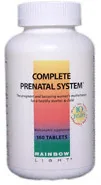 Rainbow
Light’s Complete PreNatal System Multivitamin
is a comprehensive
blend of nutrients, foods and herbs that support a mother’s vitality and
a baby’s healthy development, featuring:
- A complete
range of the nutrients women and developing babies need, including ones
that are often inadequate in pregnant and lactating women’s diets, such
as iron and folic acid.
- Over
1500 mg of whole foods such as spirulina and wheat grass, to support
women’s vitality throughout pregnancy.
- A custom
blend of herbs including red raspberry, “the pregnancy herb,”
and ginger, which makes mornings a little easier.
- Lactobacillus
sporogenes, a beneficial bacteria.
[Top]
Diabetic Multivitamins
 Enzymatic
Therapy Dr’s Choice for Diabetics – 90 Tabs
is a nutritional supplement specifically formulated to provide vitamins,
minerals, and herbs for individuals with elevated blood sugar levels.
Doctor’s Choice for Diabetics includes vitamin E, magnesium, vitamin B6,
and chromium, which support glucose metabolism, and a special standardized
extract of Gymnema sylvestre, an herb long recommended for diabetics.
Doctor’s Choice for Diabetics is designed to be used in conjunction with
the appropriate age- and gender-specific Doctor’s Choice daily multiple.This
product is designed to provide extra nutritional support for individuals
with elevated blood sugar levels. For best results, use in conjunction
with our gender-specific multiple and flax oil products.
[Top]
Multivitamins
During Pregnancy and After Birth Delay Progression of HIV In Women
By the NICHD,
biomedical research arm of the National Institute of Health
The study
appears in the July 1, 2004 New England Journal of Medicine.
Multivitamin
supplements containing high doses of the vitamin B complex, as well as
vitamins C and E, given to HIV-infected women during pregnancy and for
more than 5 years after they gave birth reduced the symptoms of AIDS,
according to a study of Tanzanian women supported by the National Institute
of Child Health and Human Development (NICHD) and the John E. Fogarty
International Center (FIC) for Advanced Study in the Health Sciences,
both of the National Institutes of Health. The supplements also bolstered
counts of disease-fighting immune cells, and modestly lowered HIV levels
in the blood.
“This
study provides evidence that multivitamin supplements may allow women
in developing countries who are infected with the AIDS virus to go for
longer than they otherwise would before needing anti-AIDS drugs,”
said NICHD Director Duane Alexander, M.D.
“By
keeping women healthier longer, multivitamin therapy can help to assure
that anti-HIV drugs can be directed to those who need them most,”
said FIC Acting Director Sharon Hrynkow, Ph.D.
The first
author of the study was Wafaie Fawzi, associate professor of nutrition
and epidemiology at the Harvard School of Public Health. Other authors
of the study also were from the Harvard School of Public Health as well
as from the Muhimbili University College of Health Sciences in Dar es
Salaam, Tanzania.
The authors
conducted the study from 1995 to 2003, a time when the antiretroviral
drugs were not available to most women in Tanzania, including those who
took part in the study.
The researchers
enrolled 1,078 HIV-infected pregnant women in Dar es Salaam, Tanzania.
Women were assigned to one of four groups and received either a placebo,
vitamin A, vitamin A in combination with a multivitamin preparation or
a multivitamin preparation alone. The women took the vitamins during pregnancy
and continued taking them for as long as they participated in the study
— more than 5 years, in many cases. The multivitamin preparation
contained high doses of vitamins C, E, and folic acid, as well as the
vitamins in the B complex group (B1, B2, B6, B12, and niacin). All of
the women received folic acid and an iron supplement during pregnancy,
whether they were in the placebo group or the vitamin groups.
All the
women received periodic checkups for at least 4 years after giving birth,
and about half of the women received checkups for more than 5 years after
giving birth. The researchers charted the women’s progress to determine
whether the supplements had an effect on the progression of HIV disease
to severe symptoms, to AIDS, or death; or on the levels of certain immune
cells (CD4+ and CD8+ cells); and on levels of HIV in the blood.
In all,
18 of 271 (7 percent) of the women who took multivitamins progressed to
AIDS during the course of the study, compared with 31 among 267 (12 percent)
of the women in the placebo group, a 50 percent reduction in the risk
of progression to AIDS. Of the 271, 52 (19 percent) of the women who took
multivitamins died, compared with 66 of 267 women (25 percent) in the
placebo group. Although the number of deaths were lower in women receiving
multivitamins, this was not a statistically significant difference. The
effect of multivitamins was strongest in the first 2 years of follow-up.
Fewer HIV
Symptoms With The Use of Multivitamins
The women
taking multivitamins also had fewer symptoms of later stage HIV infection,
such as mouth infections, mouth ulcers, or diarrheal diseases, than did
women in the other group. Similarly, the women in the multivitamin group
also had significantly higher CD4+
cell counts than did women in the other groups: overall, the average
CD4+ cell count was 48 cells higher in women who received multivitamins
compared to those who received placebo. The HIV virus level in the blood
was also modestly but significantly lower in women who received multivitamins.
The women
who took vitamin A alone did not show any pronounced differences from
the women in the placebo group, and adding vitamin A to the multivitamin
preparation did not appear to offer any significant added benefit compared
with multivitamins alone.
The benefits
noted in the Tanzania trial are modest compared to the effects of combination
antiretroviral therapy, the authors wrote. In the United States, physicians
routinely prescribe multivitamins to pregnant women. Moreover, in developed
countries like the United States, pregnant women infected with HIV are
routinely given a combination of three or more anti-HIV drugs during pregnancy
to prevent the spread of the virus to their infants.
However,
in developing countries, vitamin supplementation during pregnancy is not
routine and is not provided following pregnancy, explained Lynne Mofenson,
M.D., Chief of NICHD’s Pediatric, Adolescent and Maternal AIDS branch,
which provided funding for the study.
Low Cost Multivitamins:
Alternative To Antiretoviral Therapy
“These
results suggest that use of multivitamins by HIV-infected women during
and after pregnancy can slow the course of HIV disease, and could provide
a low-cost treatment to prolong the time before they need antiretroviral
therapy,” Dr. Mofenson said. She added that multivitamin therapy
could result in significant cost savings for developing countries.
The researchers
wrote that the retail costs of a year’s supply of the multivitamins used
in this trial is about $15, and that wholesale prices are substantially
lower. “Our findings should encourage the use of multivitamin supplements
as supportive care to those infected with HIV in developing countries,”
Dr. Fawzi said.
Dr. Mofenson
noted that more studies are needed to define the minimum dose of multivitamins
needed to produce a health benefit and to determine whether the multivitamins
might provide similar benefits if given to persons already receiving antiretroviral
therapy.
The NICHD
is part of the National Institutes of Health (NIH), the biomedical research
arm of the federal government. NIH is an agency of the U.S. Department
of Health and Human Services. The NICHD sponsors research on development,
before and after birth; maternal, child, and family health; reproductive
biology and population issues; and medical rehabilitation. NICHD publications,
as well as information about the Institute, are available from the NICHD
Web site, http://www.nichd.nih.gov,
or from the NICHD Information Resource Center, 1-800-370-2943; e-mail
NICHDInformation
ResourceCenter@mail.nih.gov.
|



